We have always wanted to visit Newfoundland so last winter Dian and I decided to start making plans. We reserved 6 Airb&b's, a rental car and got a flight out of Abbotsford for the 2nd of June. This blog (the first of 3) covers the first 2 accommodations.

We arrived in St. John's in a pouring rain after an all night flight. Luckily our first house in Harbour Grace was only an hour and a half away. Harbour Grace was the location where Amelia Earhart landed after being the first woman to cross the Atlantic.

We had the whole house to ourselves. This picture also shows our new rented Jeep with 300 kilometres on it. By the time out trip was over we had logged over 8000 kilometres. This location gave us a base to tour the whole peninsula including sites like Hearts Content where the first trans Atlantic cable terminated.

Dian in the kitchen. This house was on an ocean inlet and was very well equipped.

Dock at the rear of the house.

Black Ducks are very common here and they were resident on our waterfront.

Len and Amelia Earhart in Harbour Grace where she took off on her trans Atlantic flight in 1932.

This is a shot of Bay de Verde. A typical picturesque fishing town further up the road from Harbour Grace.

Bay de Verde's Harbour

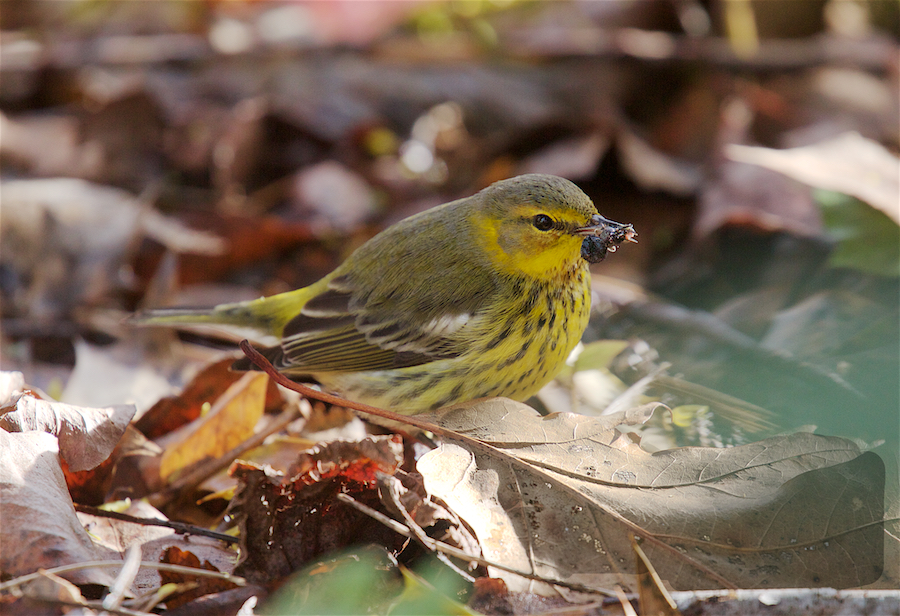
Black-throated green Warbler. Not a bird we often see in our part of B.C.

Boreal Chickadees appeared to be more common here than Black-capped Chickadees.

This Dark-eyed Junco is of the Slate-colored variety. This color morph was the only one we saw here.

The beginning of a trail we hiked, warned us of fairies. We didn't see any but did find their house. Close to Red Head Cove.

Greater Black-backed Gulls cause a lot of excitement when one shows up in B.C. but they are very common here.

Greater Yellowlegs.

Another common gull is the Herring Gull. Here a male and female were canuggling (I looked that up).

We got a tip there was an iceberg in the harbour of Grates Cove. This a small village on the tip of the Avalon Peninsula.

And there it was-right in the harbour.

We returned 2 days later to find a huge chunk had dropped out of the centre.

We subsequently found more bergs in this area. Here are 2 of them.


A picture of a Northern Waterthrush. Another common bird here but not easy to find as they like to stay hidden.

White-throated Sparrows are common across Canada and we had no problem finding them here.

Yellow Warbler. They are common across Canada and we have found these delicate looking birds above the Arctic Circle on a previous trip.

Our second stop was Bonavista which was about 3 hours further north.

The B&B here was in a converted catholic hall. Our room was in the right hand corner closest to the front and our hostess was Johanna. She made a lovely traditional breakfast for us every morning.

Elliston is close to Bonavista and it has a colony of Puffins nesting on an island.


Puffins nest in holes in the ground. The iceberg was nice touch.

Johanna's daughter told us about a family of foxes in Elliston. We found them right away. Here is the mother. (I think). She had 2 kits which she left alone while she hunted.


Elliston also is famous for root cellars. "Through the coordinated efforts of Memorial University of Newfoundland, Tourism Elliston and Human Resources Development Canada, Elliston was able to officially declare itself the "Root Cellar Capital of the World" in July 2000. Elliston boasts 135 documented root cellars, some of which have survived nearly two centuries. This makes Elliston a cultural center for those who seek to gain an understanding of early Newfoundland subsistence."

A view from our room in Bonavista.

Another view from our room. Isn't this exciting?

Bonavista harbour. Taken while on a Zodiac tour.

Bonavista "catches" many icebergs because of its location.


This iceberg was covered in alluvial deposits from somewhere in Greenland where it originated.


These iceberg photos were all taken from our zodiac. This was a great way to get up close and the weather was perfect.

This dock was home base for the zodiac.

End of this blog. Scroll down for previous blog or hit "Older posts".